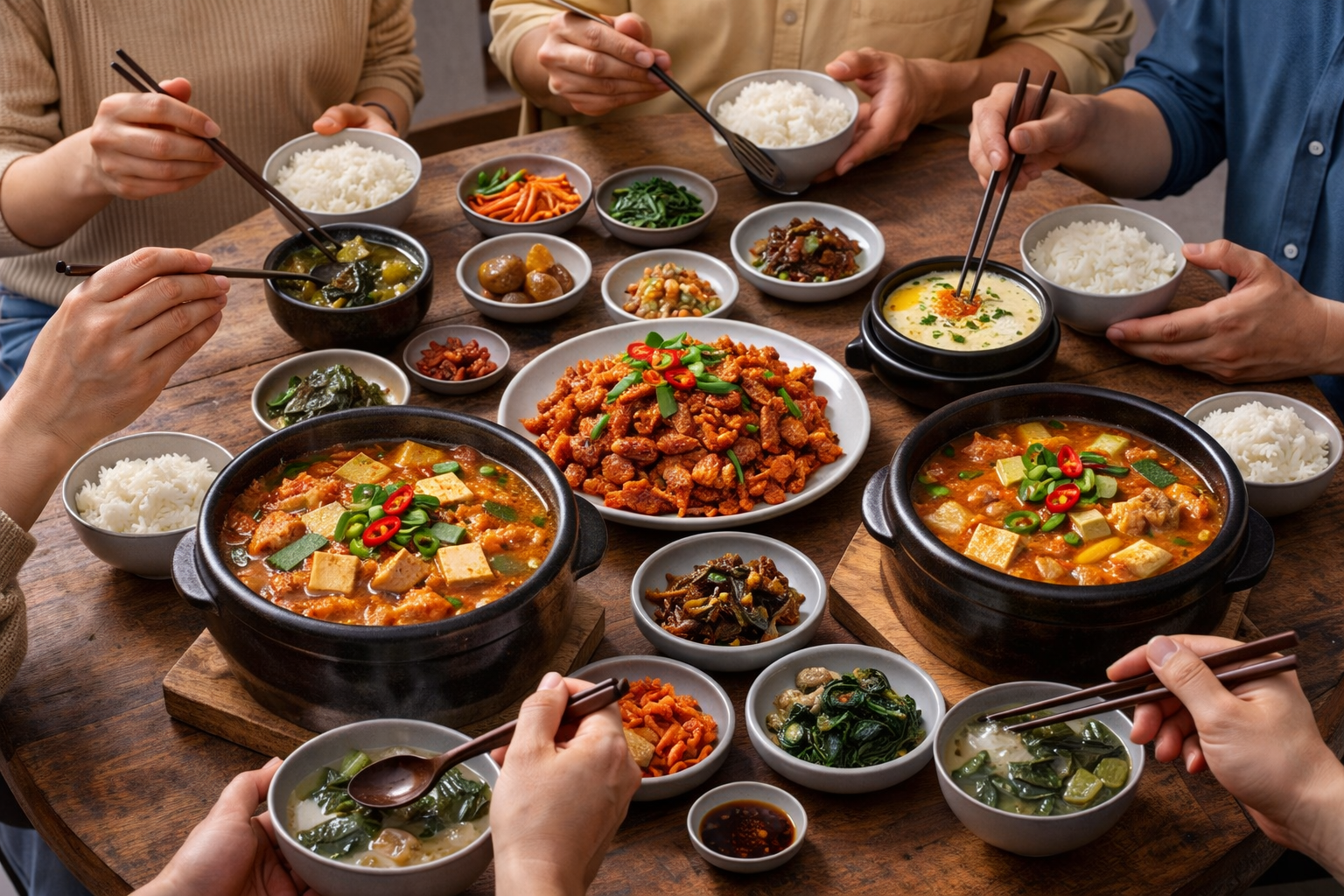

🍽️The Ultimate Guide to Korean Home Meals (한국 집밥 이야기)_ Editor 🎨 Seongeun (성은)
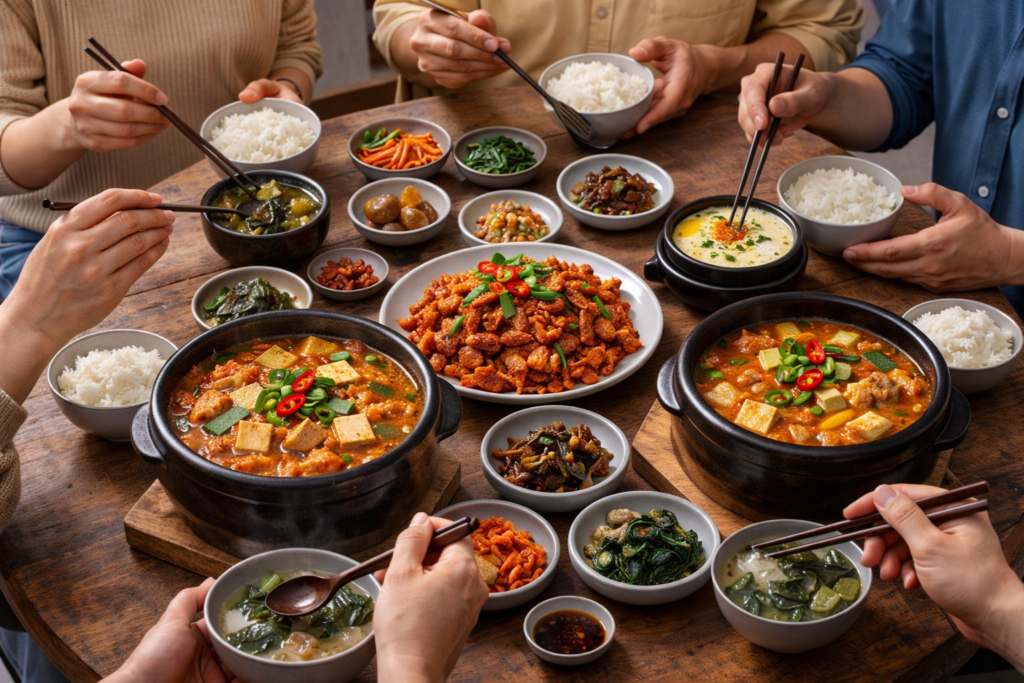
Quiet, warm, repetitive — and deeply comforting.
This is the food Koreans grow up with.
Korean food isn’t only about bold street flavors or viral ramen.
The real soul of Korean cuisine lives at home —
in slightly chipped bowls, a rice cooker clicking in the corner,
and a table that looks similar every day… yet never feels boring.
Korean home meals are not flashy.
They’re dependable.
They show up whether you’re happy, sick, tired, or heartbroken.
This is the food that raises people.
🧊 The Korean Mom’s Fridge (한국 엄마의 냉장고 감성)
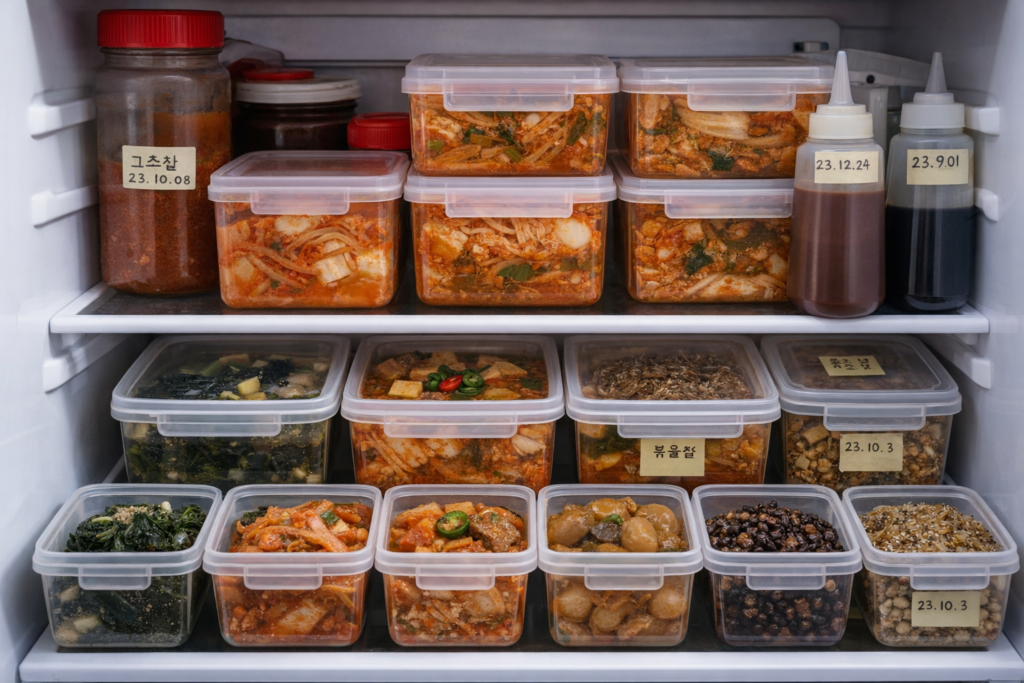
Open a Korean household fridge and you’ll almost always find:
- multiple containers of kimchi
- leftover soup in stainless steel bowls
- half-used sauces labeled with dates
- small side dishes waiting patiently
Nothing is wasted.
Everything has a purpose.
And somehow, a meal appears in under 20 minutes.
Korean home cooking isn’t about recipes —
it’s about rhythm.
⭐ 1. Kimchi Jjigae (김치찌개)
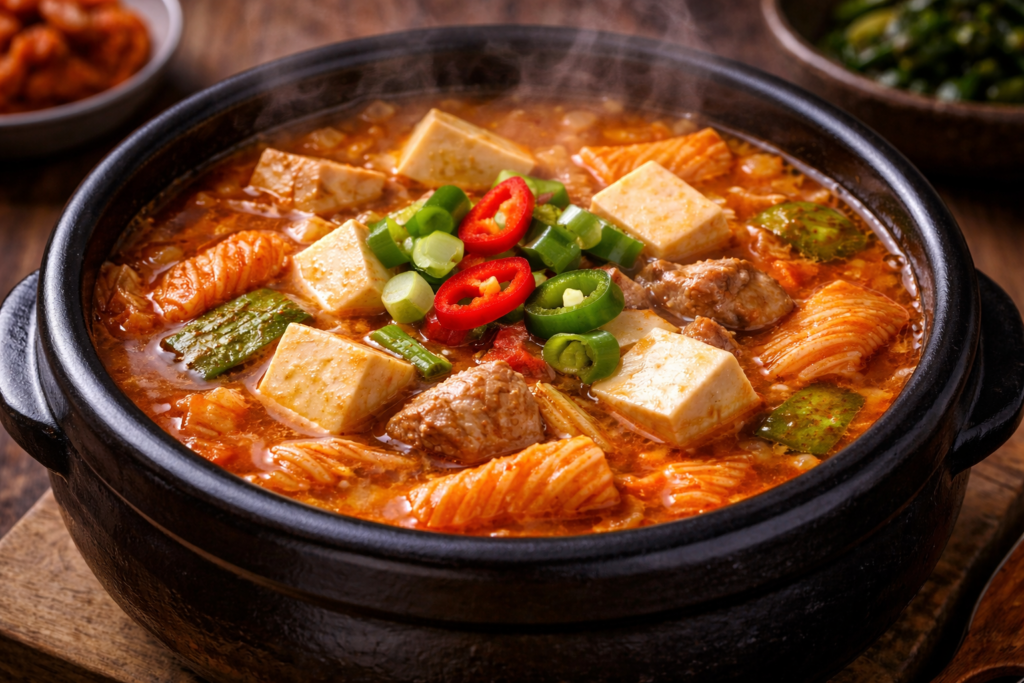
Spicy, sour, deep, honest.
Kimchi jjigae is what happens when kimchi grows up.
Old, fermented kimchi simmered with tofu, pork, onions, and chili paste.
This is the dish for:
- rainy days
- bad moods
- homesickness
- “I don’t know what to eat” moments
Every family swears their kimchi jjigae is the best.
They’re all right.
⭐ 2. Doenjang Jjigae (된장찌개)
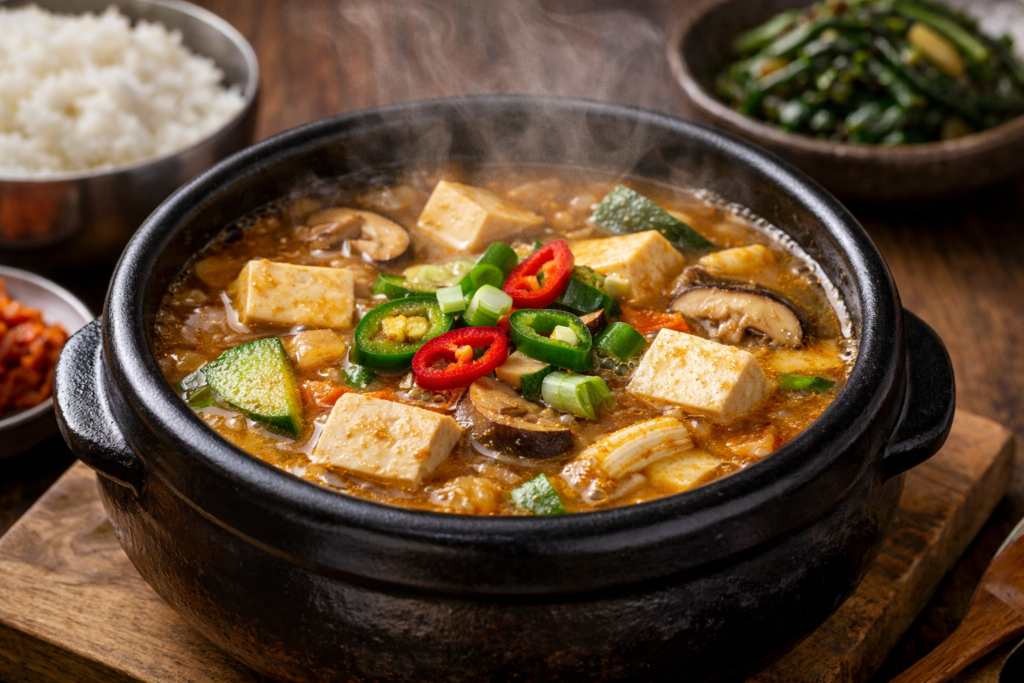
Earthy. Salty. Quietly powerful.
Made with fermented soybean paste, vegetables, tofu — sometimes seafood.
No dramatic spice. No show-off flavors.
This is adult food.
The kind you crave without knowing why.
Doenjang jjigae tastes like:
- stability
- routine
- coming home before dark
It’s the reason Koreans say:
“집밥이 제일 좋아.”
(Home food is the best.)
⭐ 3.Miyeok Guk (미역국 / Seaweed Soup)
Gentle, nourishing, symbolic.
Miyeok guk is traditionally eaten:
- on birthdays
- after childbirth
- when someone needs care
It’s light but deeply comforting.
Koreans associate it with mothers — because it’s the first soup many women eat after giving birth.
This isn’t “diet soup.”
It’s memory soup.
⭐ 4. Gyeran Jjim (계란찜 / Steamed Egg)
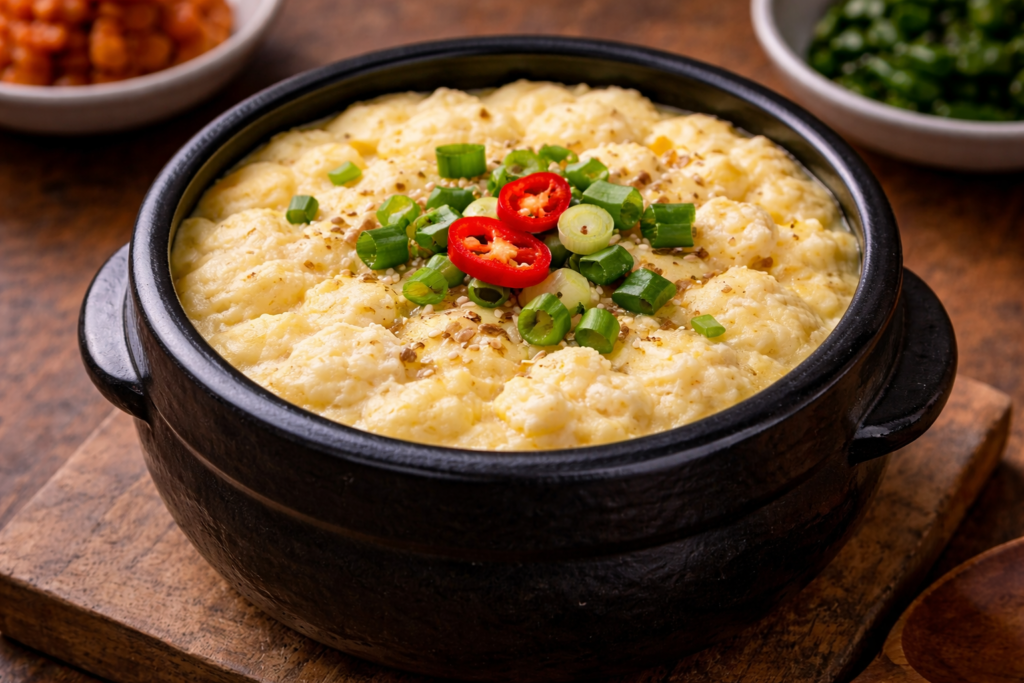
Soft like a cloud.
Fluffy eggs steamed until they wobble gently.
Sometimes plain, sometimes with scallions, seafood, or sesame oil.
This is the dish for:
- kids
- spice-sensitive eaters
- people who had a rough day
One spoonful feels like being told:
“It’s okay. Eat first.”
⭐ 5. Jeyuk Bokkeum (제육볶음 / Spicy Pork Stir-Fry)
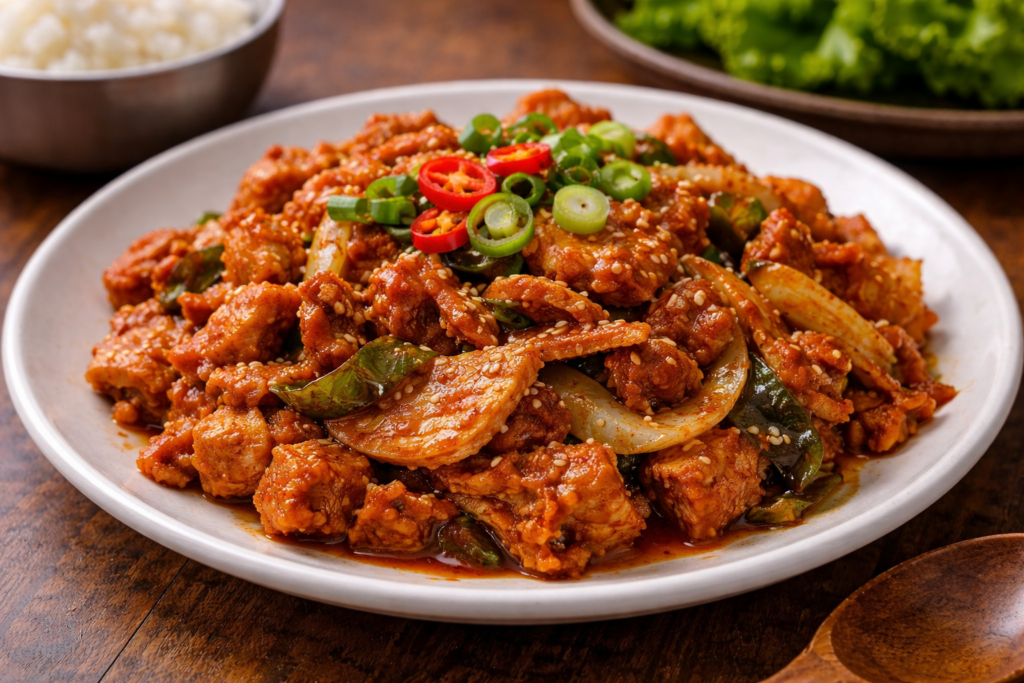
Loud, bold, and very loved.
Thinly sliced pork belly stir-fried with gochujang, garlic, and vegetables.
Served with rice and lettuce for wrapping.
This is the “today we eat well” dish.
The kind that makes everyone come to the table faster.
Add rice.
Add kimchi.
Add silence — because everyone’s busy eating.
🍚 The Real Structure of a Korean Home Meal
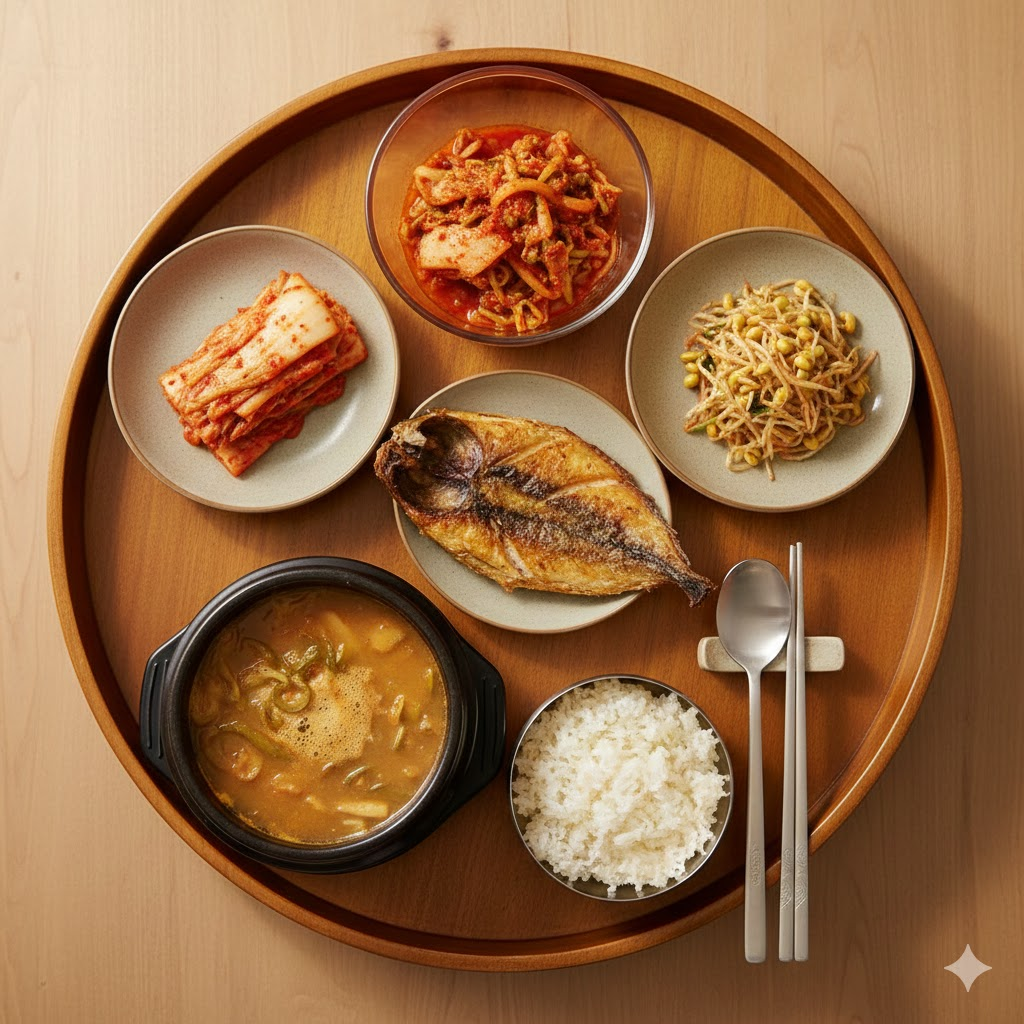
A typical Korean home table looks like:
- rice (always)
- soup or stew
- 2–5 side dishes (banchan)
- one main dish (sometimes optional)
Nothing is plated individually.
Everything is shared.
Eating together matters more than what’s being eaten.
🔗 Connect to Other Korean Food Guides
If you enjoyed this warm side of Korean food, explore next:
- 🍢 Korean Street Food Guide
- 🍜 Korean Ramen Guide
- 🥬 Korean Kimchi Types
- 🍱 Korean Convenience Store Guide
Korean food isn’t just about flavor.
It’s about how it holds people together —
one bowl, every day.