
EDITOR : SEONGEUN
Korean culture is warm, family-oriented, and deeply rooted in tradition.
But here’s a fun fact that surprises many people who experience Korea more closely:
Some traditions were never really equal—especially during holidays.
This isn’t about blaming.
It’s about understanding how culture, history, and family expectations shaped everyday life in Korea—and how it’s slowly changing.
🌟 1. Holiday Travel Had a “Default Route”
Fun Fact:
For a long time, Korean holidays followed an unspoken rule.
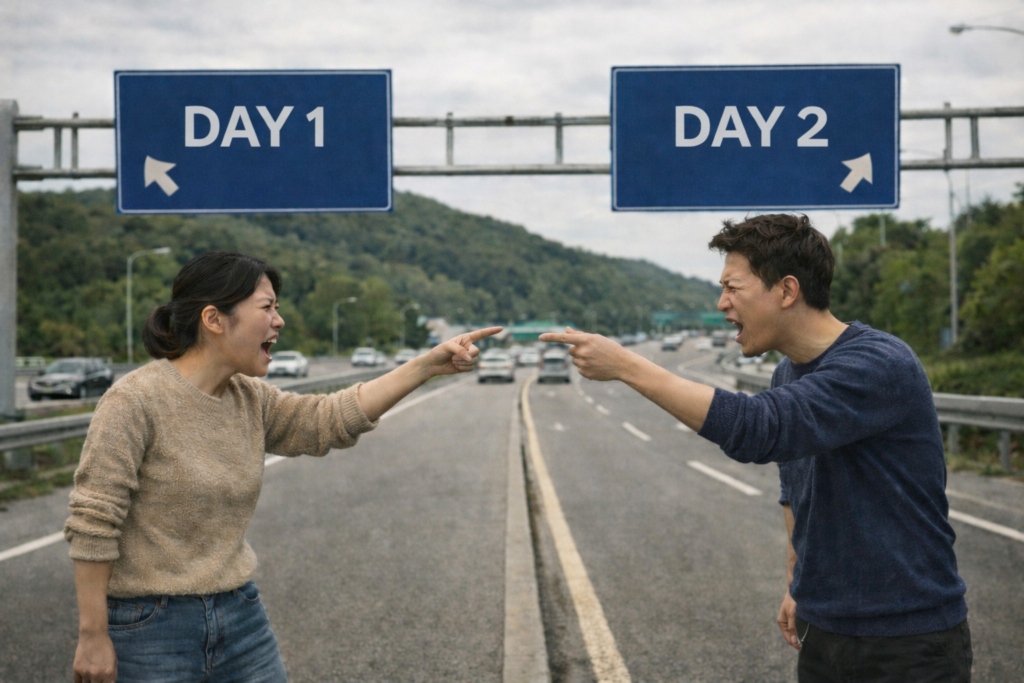
👉 Seollal (Lunar New Year) & Chuseok “Day 1” = the husband’s family
👉 The wife’s family = Day 2… or later… or sometimes not at all
It wasn’t written anywhere.
But everyone knew the order.
People didn’t say “both families.”
They said “first” and “after.”
And that alone tells you a lot.
🌟 2. “Both Families” Didn’t Really Mean Equal
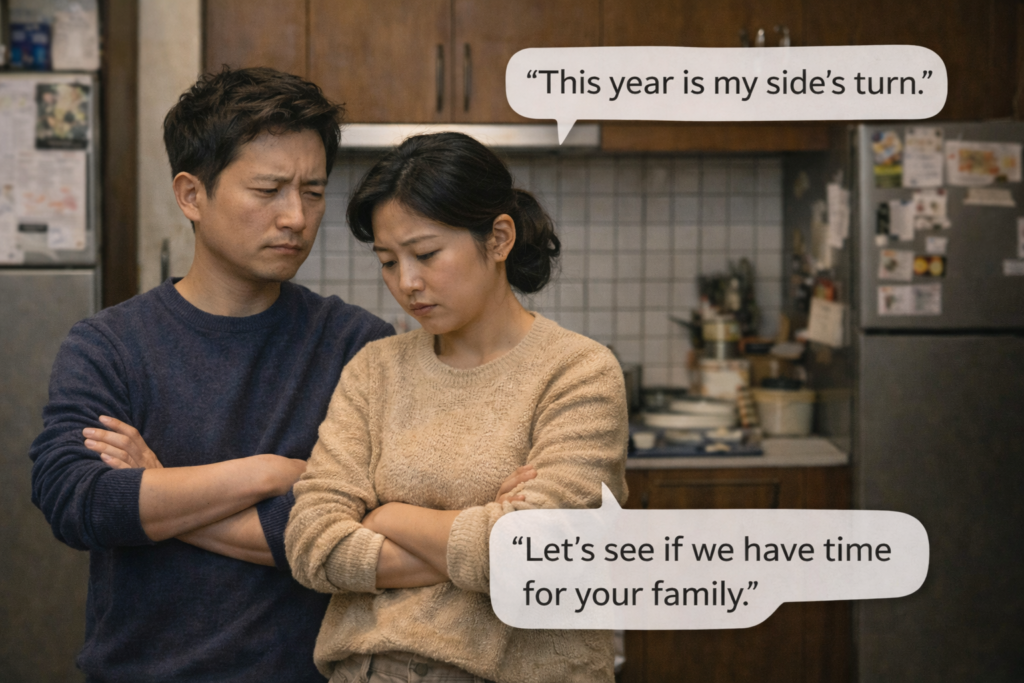
Listen closely to common holiday conversations from older generations:
- “We’ll go to my parents first.”
- “Let’s see if we have time for your family.”
- “This year is my side’s turn.”
Even the language showed priority.
Visiting the husband’s family was expected.
Visiting the wife’s family was… flexible.
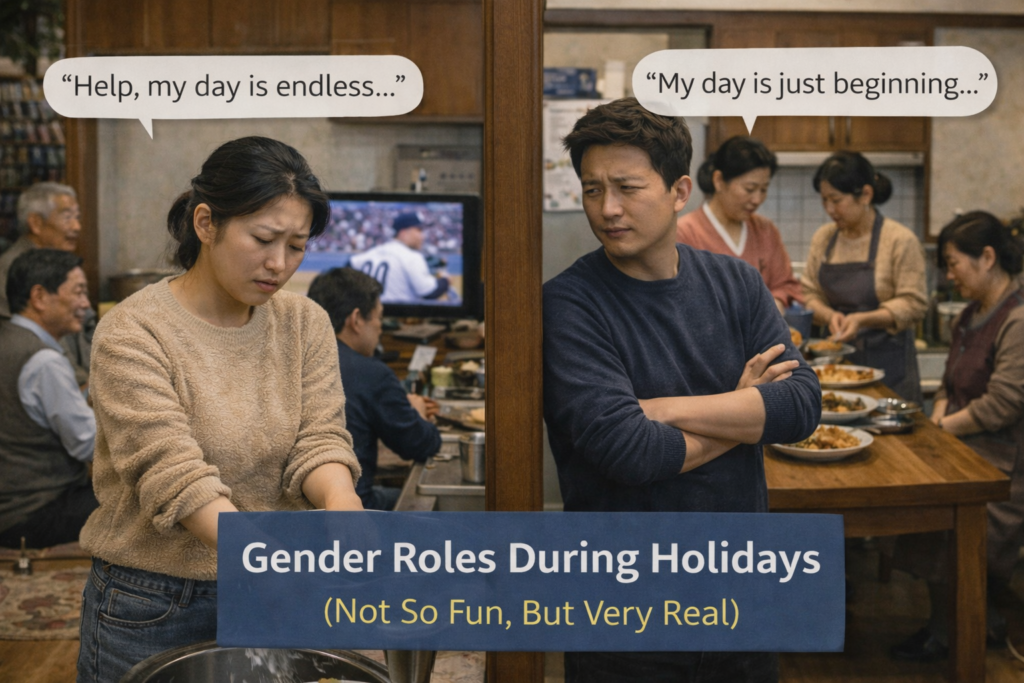
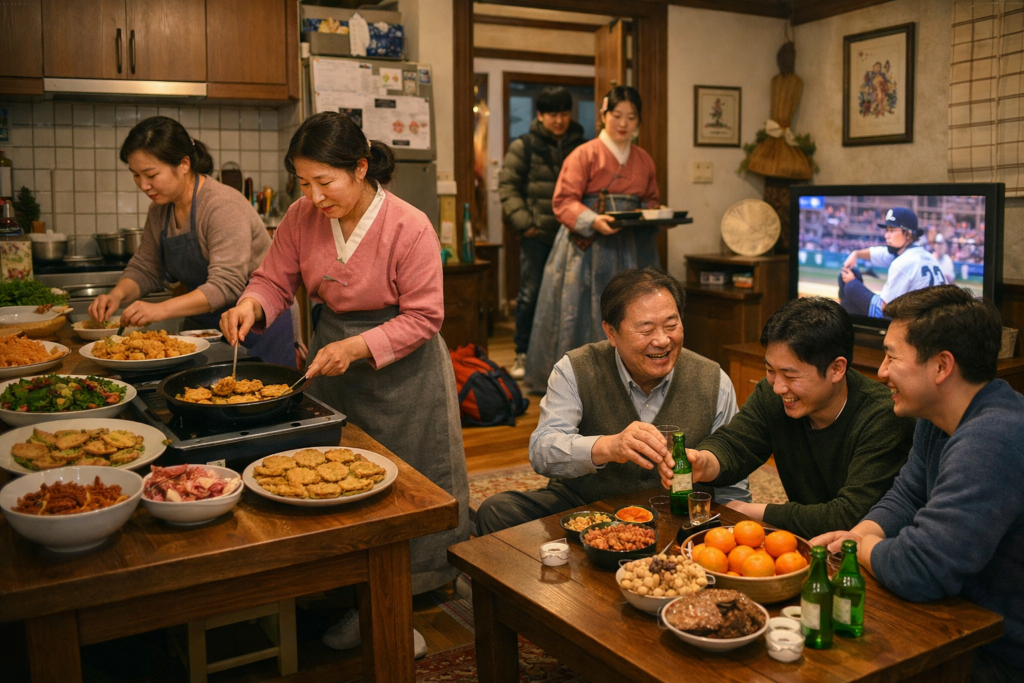
🌟 3. The Kitchen vs. The Living Room
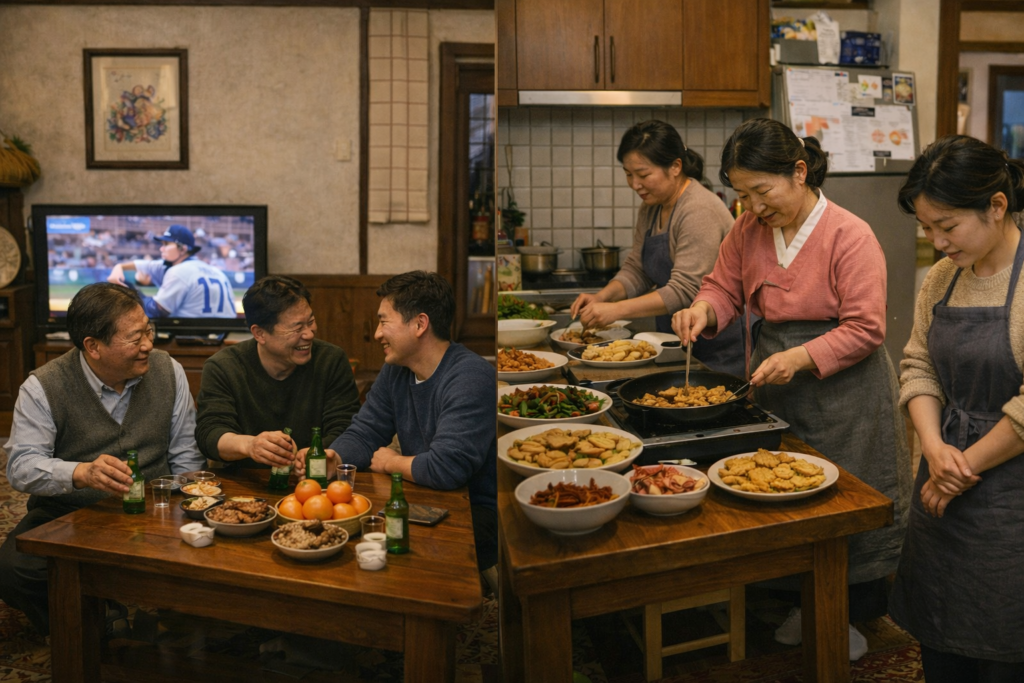
Another very Korean holiday scene:
- Living room: men, TV, conversations, rest
- Kitchen: women, food prep, cooking, dishes
No one needed to assign roles.
People simply moved.
Foreign visitors often find this shocking—not because it’s forced,
but because it happens so naturally.
That’s how deeply it was normalized.
🌟 4. “We Had It Worse Back Then”
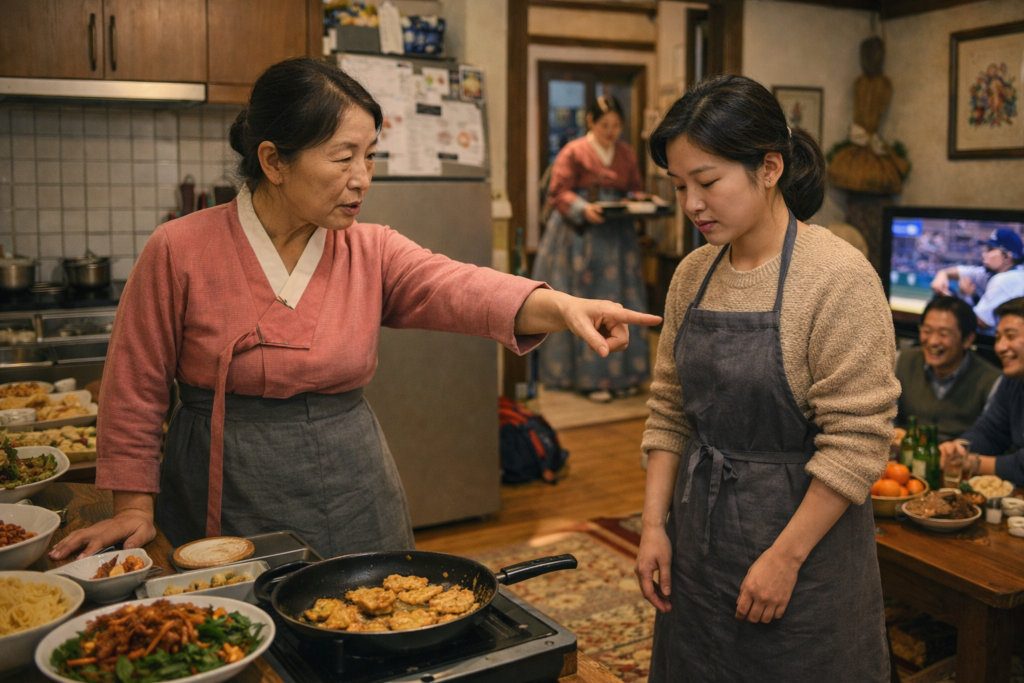
A phrase many Koreans grew up hearing:
“We had it much harder when we were young.”
And often, it’s true.
For many women in older generations,
there wasn’t room to question these roles.
You followed them to keep peace, to be a “good daughter-in-law,” to survive socially.
So this isn’t about personal failure.
It’s about systems that didn’t offer choices.
🌟 5. Same Scene, Different Reactions (Generation Gap)
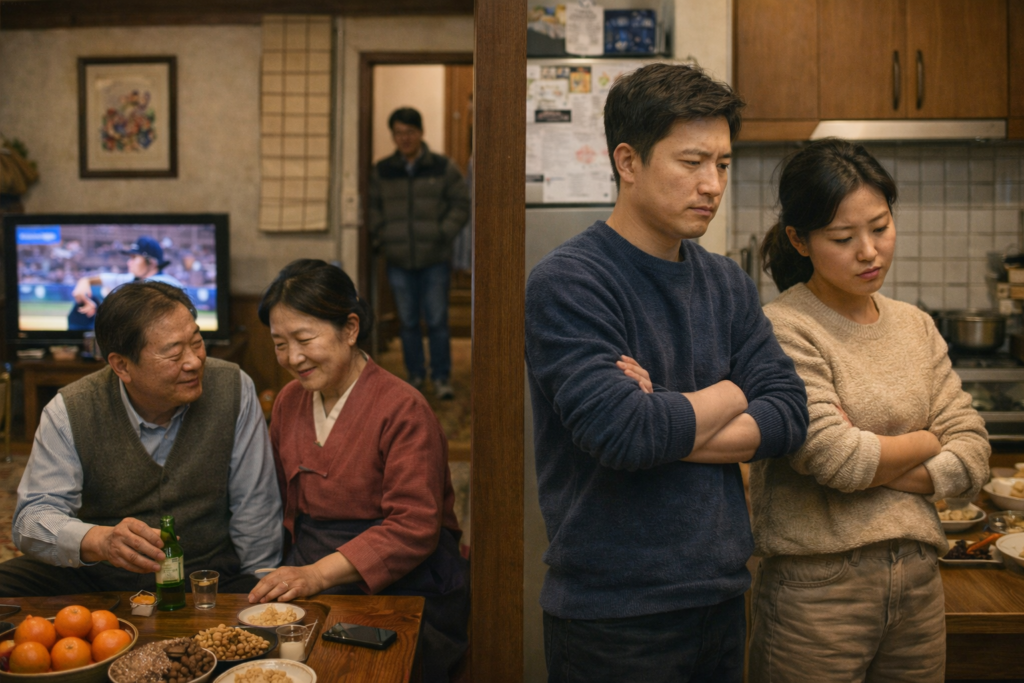
Today, the same holiday scene creates very different feelings.
- Older generation:
“Family means enduring things together.” - Younger generation:
“Why is endurance expected from only one side?”
This gap explains many modern family conflicts in Korea.
It’s not that values disappeared.
It’s that people started asking questions.
🌟 6. Is This Still a Thing Today?
Yes… and no.
Legally and socially, Korea has changed a lot.
But emotionally?
- Holiday stress still falls more on women
- Expectations are often unspoken
- Many people stay silent to avoid conflict
So this isn’t just a story about the past.
It’s a story about a culture in transition.
🌟 Why This Is Still a “Fun Fact”
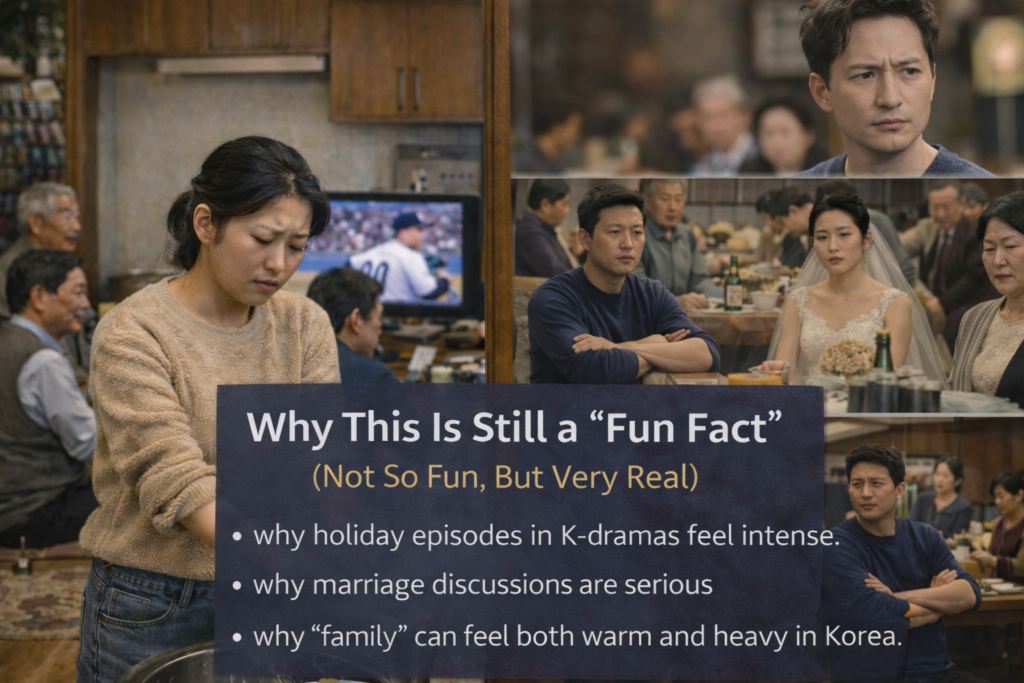
Because it helps people understand Korea more honestly.
Not idealized.
Not attacked.
Just real.
Understanding these details explains:
- why holiday episodes in K-dramas feel intense
- why marriage discussions are serious
- why “family” can feel both warm and heavy in Korea
🎉 Final Thoughts
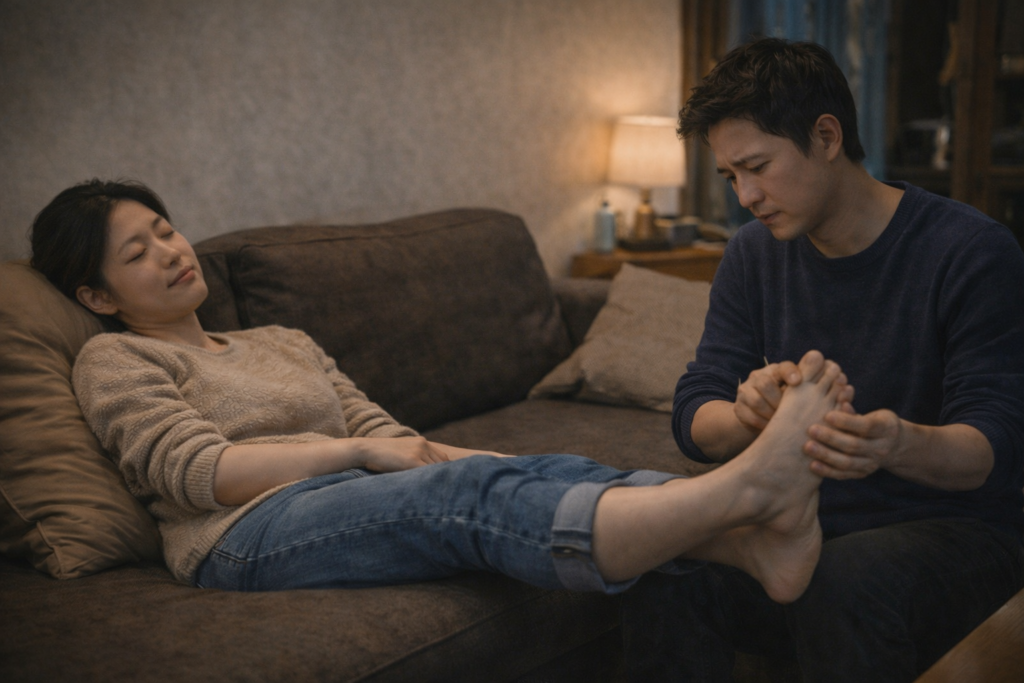
Korean culture is changing—slowly, thoughtfully, sometimes painfully.
What used to be unquestioned is now being gently renegotiated.
And that process itself is part of modern Korean identity.
Knowing these stories doesn’t make Korea less lovable.
It makes it more human.
If you want to understand Korea on a deeper level, stay with us and keep following these stories.
Next, we’ll dive into the real side of Korean wedding culture—what it looks like beyond the celebrations.